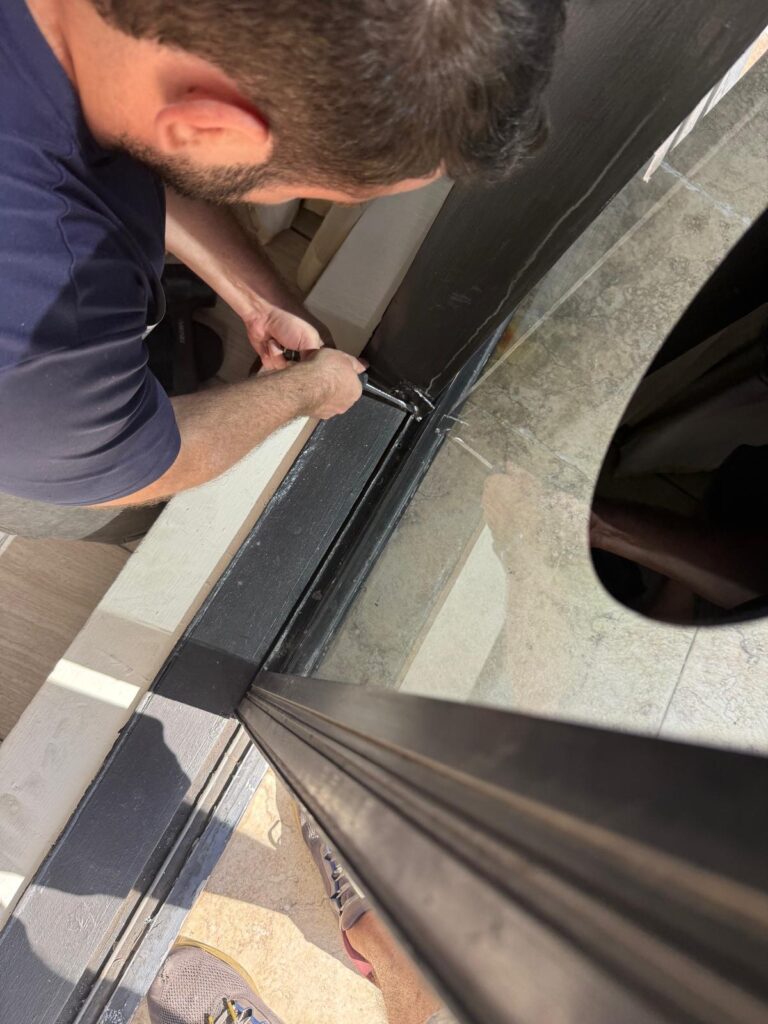
After years of working on sliding glass doors and windows throughout South Florida, I have seen almost every type of sliding door problem imaginable.
I have repaired doors that would barely move, doors that jumped off the track, broken rollers, damaged tracks, locks that would no longer line up, cracked glass, loose handles, water leaks, and extremely heavy sliding glass doors that became a real safety concern.
But some of the most expensive problems I see did not start as major repairs.
They started when a homeowner tried to fix a relatively small sliding glass door problem themselves.
Watching a YouTube video can make sliding glass door repair look simple. Remove a few screws, lift the door, replace the rollers, put everything back together, and you are finished.
In reality, it can be very different.
A sliding glass door can weigh well over 100 pounds depending on its size, frame, and type of glass. Hurricane-rated and impact sliding glass doors can be especially heavy.
One wrong move can turn a $200–$400 repair into a much larger repair—or even a complete door or glass replacement.
A Small Roller Problem Can Become a Major Repair
One of the most common calls I receive is:
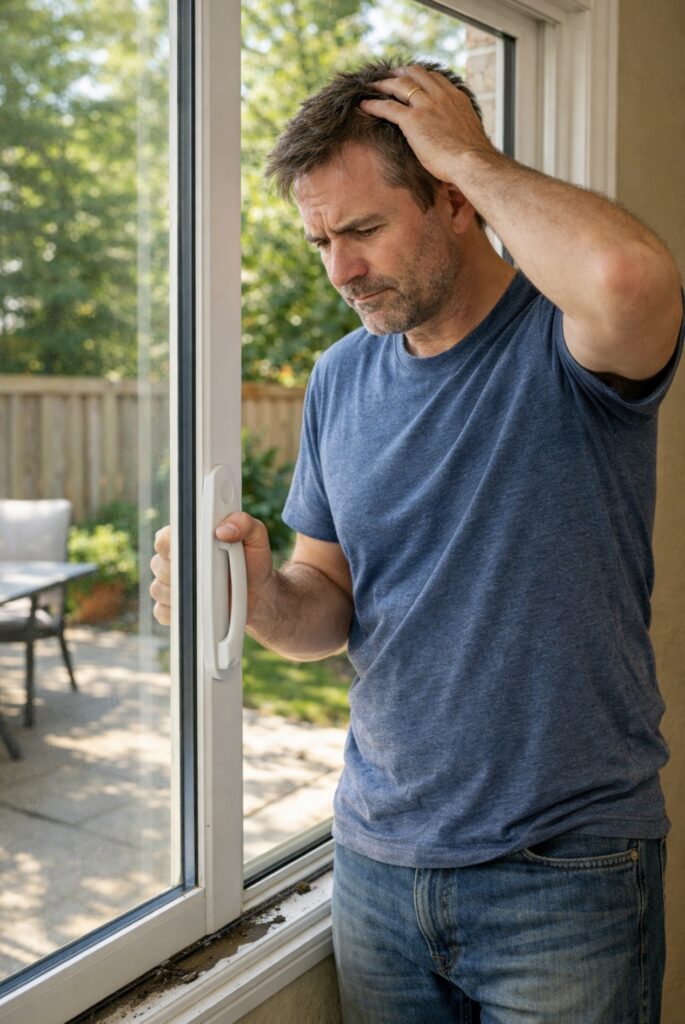
“My sliding glass door is very hard to open.”
Most of the time, homeowners assume the track needs lubrication.
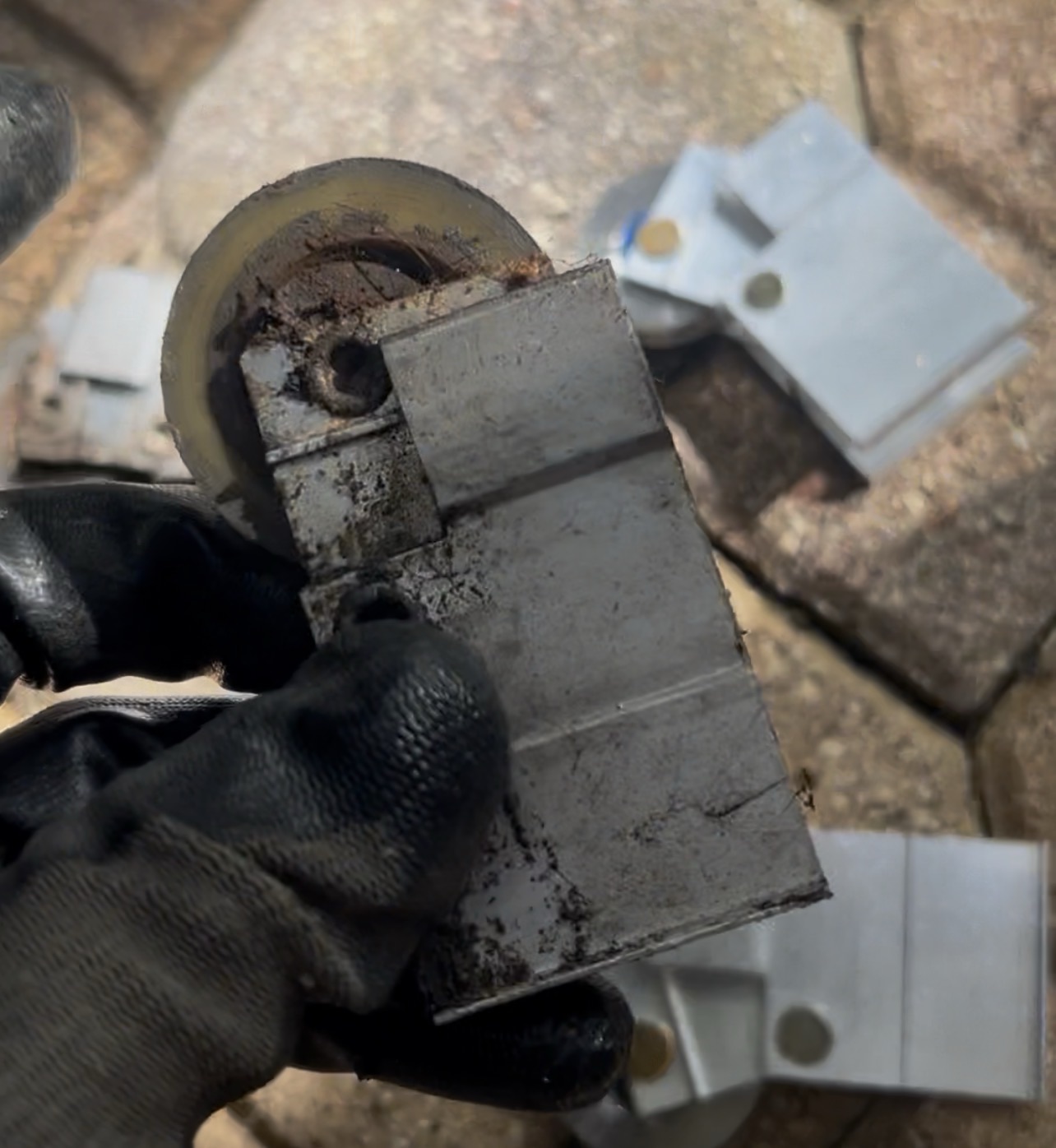
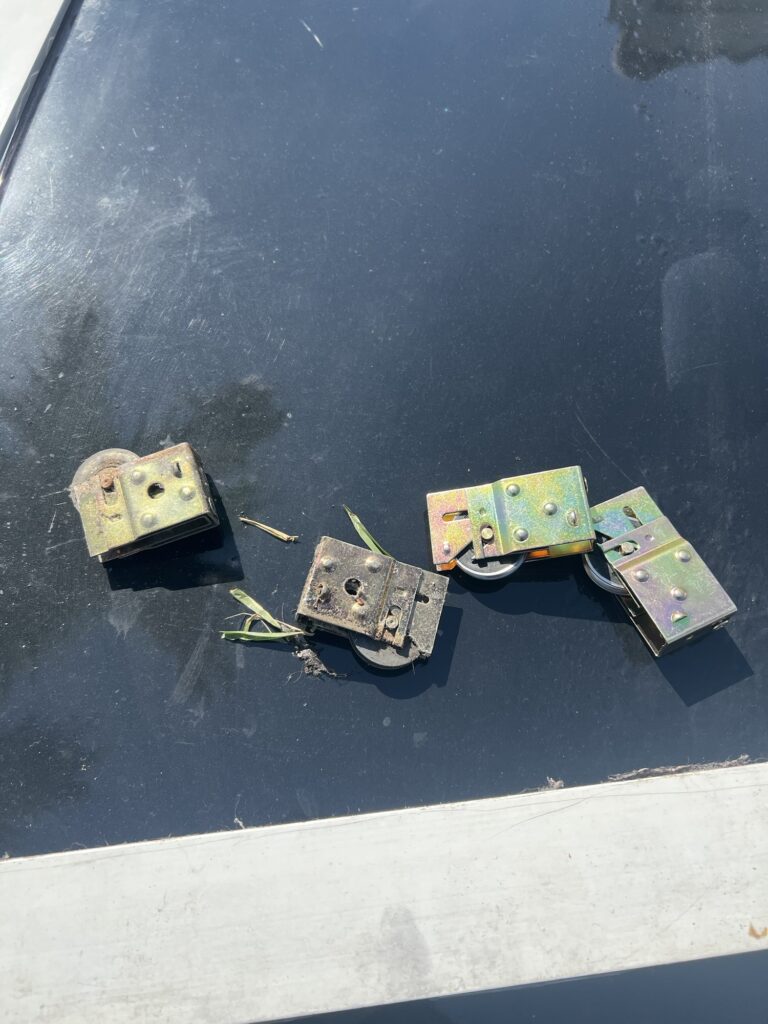
Sometimes the real problem is damaged or worn rollers.
When the rollers wear out, the aluminum frame can begin dragging directly against the track.
The homeowner keeps forcing the door open and closed.
Every time the door moves, the damaged roller or frame can grind against the track.
Eventually, instead of simply replacing the rollers, now we may also have to repair or replace the damaged track.
A relatively simple roller replacement has now become a much larger job.
This is something I have personally seen many times.
Scenario #1: The Homeowner Forces the Door
A homeowner notices that the sliding door is getting harder to move.
Instead of having it inspected, they continue pulling harder.
Then the door starts making a grinding sound.
Eventually, the roller completely fails.
Now the weight of the sliding glass door is sitting against the aluminum track.
The homeowner pulls the door again.
The bottom of the door digs into the track and damages it.
Instead of needing only new sliding glass door rollers, the homeowner may now need:
● Roller replacement
● Track repair
● Track cap installation
● Door realignment
● Lock adjustment
Forcing a sliding glass door is almost never a good solution.
If the door suddenly becomes difficult to move, something changed mechanically.
Scenario #2: Trying to Remove a Heavy Sliding Glass Door Alone
This is one of the situations that concerns me the most.
Someone watches a video showing how to remove a sliding glass door.
They remove the adjustment screws, lift the panel, and try to pull it out of the track.
But they do not realize how heavy the panel actually is.
The door tilts.
The homeowner loses control.
Now several things can happen.
The glass can crack or completely shatter.
The frame can bend.
The door can fall onto the floor.
The homeowner can injure their hands, feet, back, or legs.
And if it is tempered glass, when it breaks it can explode into thousands of small pieces.
Impact glass creates another problem because it can be extremely heavy.
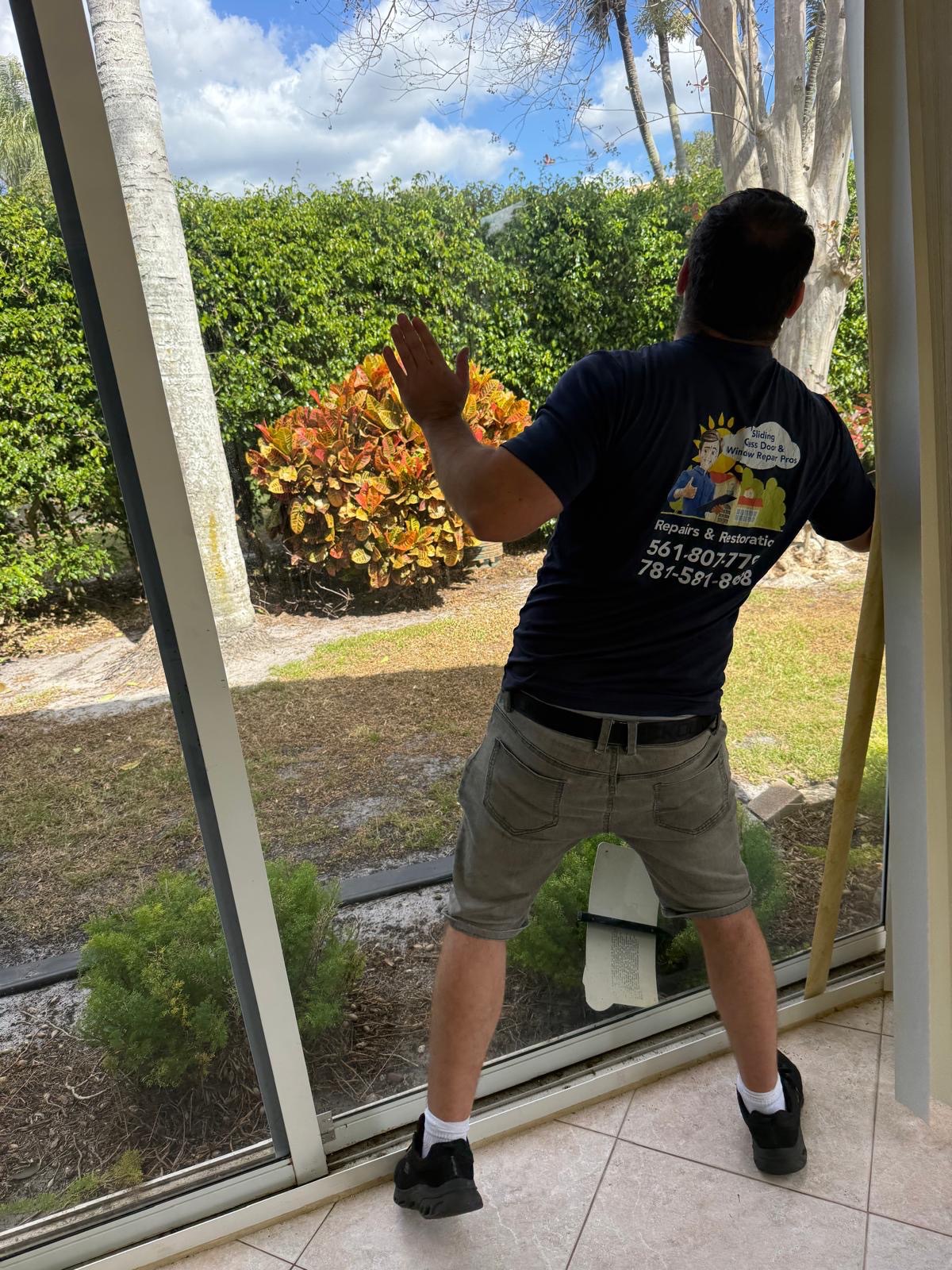
This is why professional sliding glass door technicians normally use proper lifting techniques and, depending on the size of the door, more than one technician.
Scenario #3: The Wrong Roller Is Installed
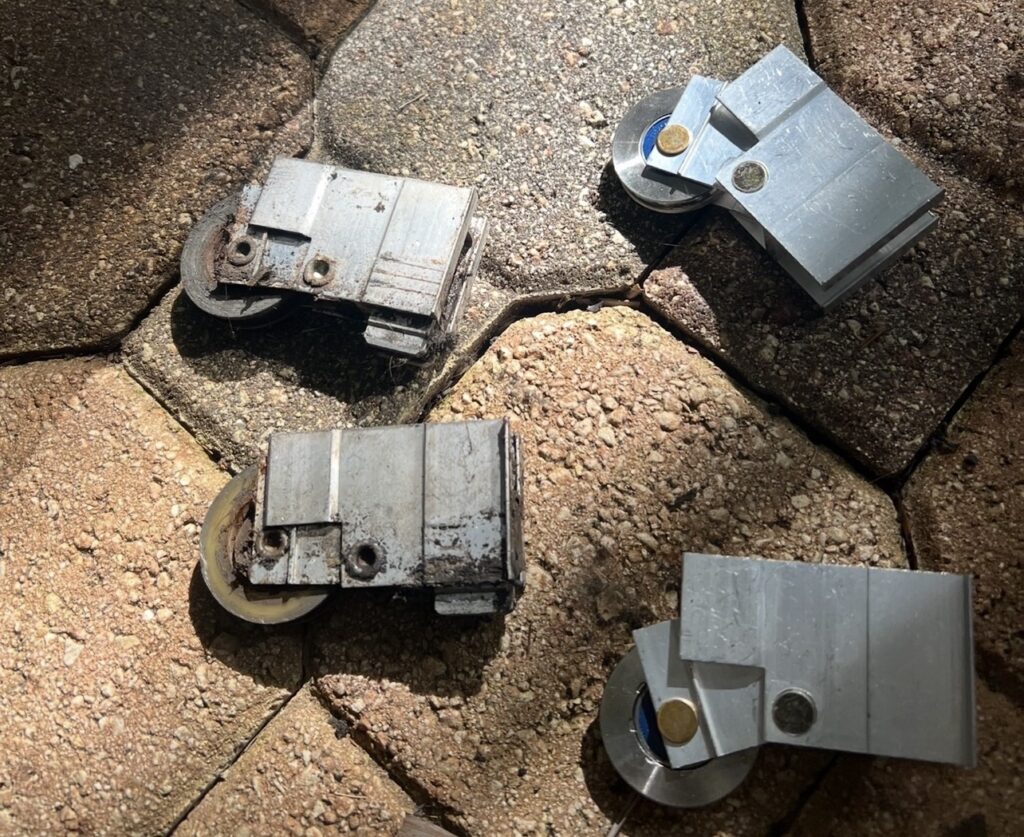
Not every sliding glass door uses the same roller.
There are many different roller assemblies, wheel sizes, housing styles, materials, and mounting systems.
I have arrived at homes where someone ordered rollers online because they looked similar to the original ones.
They installed them.
The door moved—but something did not feel right.
After a few weeks, the door started dragging again.
Sometimes the wrong roller changes the height of the door.
Now the lock does not line up.
The door may not seal correctly.
The frame may rub against the track.
The homeowner may then begin adjusting other parts of the door trying to compensate for the wrong roller.
Now one incorrect part has created several different problems.
Scenario #4: Adjusting the Rollers Too High
Most sliding glass doors have roller adjustment screws.
It looks simple.
Turn the screw and the door goes up or down.
But proper adjustment is more than just raising the door.
The door needs to sit correctly inside the frame.
The reveal around the door should be properly aligned.
The lock should engage correctly.
The weatherstripping should make proper contact.
The door should roll smoothly without being raised excessively.
I have seen homeowners raise the rollers too high because they are trying to make the door roll easier.
Then the door becomes unstable.
The top of the panel may not sit correctly inside the upper track.
The lock may stop lining up.
In extreme situations, the door can become easier to lift out of the track.
Scenario #5: Using the Wrong Lubricant
Another very common DIY mistake is spraying lubricant everywhere.
Some homeowners use heavy grease.
Some use WD-40.
Some use oil.
Initially, the door may feel smoother.
Then dust, sand, hair, pet hair, and dirt begin sticking to the lubricant.
In South Florida this can become even worse because sliding doors are constantly exposed to humidity, sand, moisture, and outdoor debris.
Eventually, the track becomes covered in a dirty, sticky buildup.
The door becomes difficult to move again.
Lubrication cannot repair a damaged wheel, bent roller housing, worn bearing, or damaged track.
A professional technician needs to determine why the door became difficult to operate before deciding what treatment is appropriate.
Scenario #6: Damaging the Sliding Door Track
Sliding glass door tracks are usually aluminum.
Aluminum can bend.
I have seen people use screwdrivers, hammers, pliers, and other tools trying to straighten a damaged track.
Sometimes they make it worse.
A small damaged section becomes crushed.
The roller can no longer travel smoothly across it.
Then every time the door passes that section, you feel a bump.
Eventually the constant impact can damage the new rollers too.
Professional track repair requires understanding where the roller actually travels and how the door’s weight is distributed.
Scenario #7: Breaking the Glass While Working on the Door
Sliding glass door glass is not something to experiment with.
The glass may be tempered, laminated, insulated, tinted, or impact-rated depending on the door.
A homeowner may accidentally hit the edge of the glass while removing the panel.
This is important because the edge of tempered glass can be extremely vulnerable.
The center of the glass may survive a significant impact, while a relatively small strike near the edge can cause the entire panel to shatter.
I have seen situations where someone was only trying to replace a roller or handle and ended up needing an entire glass replacement.
Scenario #8: The Lock Stops Working After the Repair
Sometimes a homeowner successfully changes the rollers.
They put the door back.
It rolls.
They think the job is finished.
Then nighttime comes and they try to lock the door.
The lock does not engage.
Why?
Because changing the roller height changes the position of the entire sliding panel.
Even a relatively small adjustment can affect how the lock lines up with the keeper.
Now the homeowner starts moving the lock.
Then they move the keeper.
Then they adjust the rollers again.
Eventually nothing lines up correctly.
A professional sliding glass door repair includes checking how the door rolls, sits, closes, and locks.
Scenario #9: Stripped Screws
Older sliding glass doors can have screws that have not moved for many years.
They may be corroded.
The screw heads may already be partially damaged.
A homeowner uses the wrong screwdriver or drill bit.
The screw strips.
Now the part cannot be removed normally.
I have seen simple repairs become much more difficult because adjustment screws or roller screws were completely stripped.
Sometimes we have to extract the damaged screw, drill it out, or use another method to access the component.
Scenario #10: The Door Comes Off the Track
A sliding glass door that is improperly adjusted can potentially come partially off its track.
This is especially dangerous with a large or heavy glass panel.
The homeowner may try to lift it back into place while holding the door alone.
The panel tilts.
Now all the weight shifts suddenly.
This can damage the frame, glass, track, or surrounding flooring—and it creates a serious injury risk.
Scenario #11: A DIY Repair Creates a Water Leak
Sliding glass doors are also part of the home’s exterior weather protection.
Changing the position of the door or damaging weatherstripping can create gaps.
During normal weather, the homeowner may never notice.
Then South Florida’s rainy season arrives.
Heavy rain and wind push water against the door.
Suddenly water starts entering the house.
The homeowner thinks the sliding glass door is leaking because of the rain.
But sometimes the real problem is that the door is no longer aligned or sealed correctly.
Water intrusion can damage:
● Baseboards
● Drywall
● Flooring
● Wood
● Paint
● Furniture
● Interior walls
Over time, continued moisture can contribute to mold and additional structural damage.
Scenario #12: Hurricane and Impact Doors
South Florida homes often have hurricane-rated or impact sliding glass doors.
These systems should be treated differently from lightweight interior doors.
Impact panels can be extremely heavy.
The frame, rollers, locks, and installation all work together as a system.
Installing the wrong parts or incorrectly adjusting the door can potentially affect how the door closes and secures.
This is one area where I strongly recommend professional service.
Saving a little money on a repair is not worth compromising an expensive impact sliding glass door system.
Something I Tell Homeowners All the Time
There is a big difference between:
“Can I physically do this repair?”
and
“Do I understand everything that can go wrong while doing this repair?”
A professional has usually seen the same problem hundreds or thousands of times.
We know what a failing roller sounds like.
We know what a damaged track feels like when the door moves over it.
We know when a door is sitting too high or too low.
We know when a frame is beginning to drag.
We know when a lock problem is actually being caused by alignment.
And most importantly, we understand how the different parts of the sliding glass door affect one another.
My Personal Experience in the Field
One thing I have learned from working on sliding glass doors is that the original problem is not always the expensive part.
The expensive part is sometimes what happens after someone keeps using the door incorrectly or attempts the wrong repair.
I have arrived at jobs where the original issue was probably nothing more than worn-out rollers.
But by the time I arrived:
The track was damaged.
The adjustment screws were stripped.
The lock had been moved.
The weatherstripping was damaged.
The door was no longer square.
And the homeowner had already purchased several incorrect parts.
Instead of one repair, we now had five problems to correct.
That is why I always recommend having the door inspected when it first begins showing symptoms.
Warning Signs That Your Sliding Glass Door Needs Professional Repair
Call a sliding glass door repair professional when you notice:
● The sliding door is becoming difficult to open
● The door feels extremely heavy
● You hear grinding, scraping, or popping
● The door jumps while moving
● The roller keeps coming off the track
● The lock no longer lines up
● The handle becomes loose
● The door does not close completely
● You see damage on the track
● You see gaps around the door
● Water comes through the sliding glass door
● The glass is cracked
● The frame appears bent
● The door feels unstable
● The rollers were replaced but the door is still difficult to move
The earlier the problem is diagnosed, the better the chance that the repair remains simple.
Professional Sliding Glass Door Roller Replacement
A proper roller replacement is not simply removing an old wheel and installing a new one.
The technician should inspect the entire system.
That includes the:
Rollers.
Roller housings.
Bottom track.
Top track.
Door frame.
Lock.
Keeper.
Handle.
Weatherstripping.
Door alignment.
Glass condition.
Once the correct rollers are installed, the panel should be properly adjusted and tested.
The door should roll smoothly without excessive force.
It should close evenly.
And the lock should operate correctly.
The Biggest DIY Risk: Turning a Small Problem Into an Expensive One
Most homeowners try DIY repairs because they want to save money.
I completely understand that.
But sliding glass doors are one of those systems where attempting the wrong repair can cost considerably more than calling a professional from the beginning.
A damaged roller might be inexpensive.
A damaged track costs more.
A bent frame costs more.
A broken lock adds another repair.
A shattered sliding glass door panel can cost significantly more.
Damage to flooring or walls from water intrusion can cost even more.
And personal injury is something you cannot put a price on.
Professional Sliding Glass Door Repair in South Florida
At Pro Home Sliding Glass Door & Window Repair, we work on sliding glass doors and windows throughout South Florida.
We provide services including:
Sliding glass door roller replacement.
Sliding door track repair.
Sliding glass door lock repair.
Sliding door handle replacement.
Sliding glass door alignment.
Broken window glass replacement.
Sliding glass door glass replacement.
Window repair.
Sliding glass door maintenance.
Water leak inspection around sliding glass doors and windows.
Our goal is not simply to make the door move.
The goal is to identify why the problem happened and repair it correctly so the door operates safely, smoothly, and properly.
Final Advice From Someone Who Works on These Doors Every Day
If your sliding glass door suddenly becomes difficult to open, do not keep forcing it.
If you hear grinding, stop using it excessively.
If the glass or frame feels unstable, do not attempt to remove the panel yourself.
And if you are dealing with a large impact or hurricane sliding glass door, remember how much weight you are actually handling.
A professional repair today can prevent a much more expensive replacement tomorrow.
Sometimes the smartest way to save money is knowing when not to do it yourself.
Pro Home Sliding Glass Door & Window Repair
Professional Sliding Glass Door Repair • Roller Replacement • Track Repair • Lock Repair • Glass Replacement • Window Repair
Serving homeowners throughout Broward County, Palm Beach County, Miami-Dade County, and surrounding South Florida communities.